Brighton chimney repairs, repointing & leadwork
Careful diagnosis and lasting repairs for leaking, weathered or unstable chimney stacks—from failed pointing and flaunching to lead flashings, rendering, rebuilding and removal.
- 20+ years’ experience
- £10m public liability insurance
- In-house scaffolding
- Drone-assisted surveys

Is the chimney causing your roof leak?
Chimney defects often show themselves during wind-driven rain, but water can travel along masonry, felt or timbers before appearing indoors. These signs justify a closer inspection rather than an immediate assumption about the cause.
Staining after heavy rain may relate to flashings, porous masonry, failed render or another nearby roof junction.
Weathered pointing can admit moisture and leave individual bricks less securely bonded.
Failed aprons, stepped flashings, soakers or back gutters can allow water through the roof junction.
The mortar weathering at the top of the stack can deteriorate, crack and stop supporting pots correctly.
Repeated wetting, salt exposure and frost can break down masonry faces and external finishes.
A visibly leaning stack, loose pot or falling masonry needs prompt professional assessment. Keep people clear below.
Important: an internal damp patch is not proof that the chimney itself has failed. We assess the stack, flashings, adjacent tiles or slates and the surrounding roof details before proposing work.
Chimney repairs for Brighton’s tiled and slate roofs
We tailor the specification to the construction and condition of the stack. A sound chimney may need a targeted repair; widespread deterioration may justify partial rebuilding or a different long-term option.
Chimney repointing
Removing loose or failed mortar from accessible joints and repointing with a suitable mix and finish, while retaining sound masonry wherever practical.
Lead flashing & soakers
Repairing or renewing lead aprons, stepped flashings, individual soakers and back gutters to weather the chimney-to-roof junction correctly.
Flaunching, pots & cowls
Renewing defective flaunching and addressing loose or unsuitable pots, caps and cowls according to the use and ventilation needs of the flue.
Rendering & weatherproofing
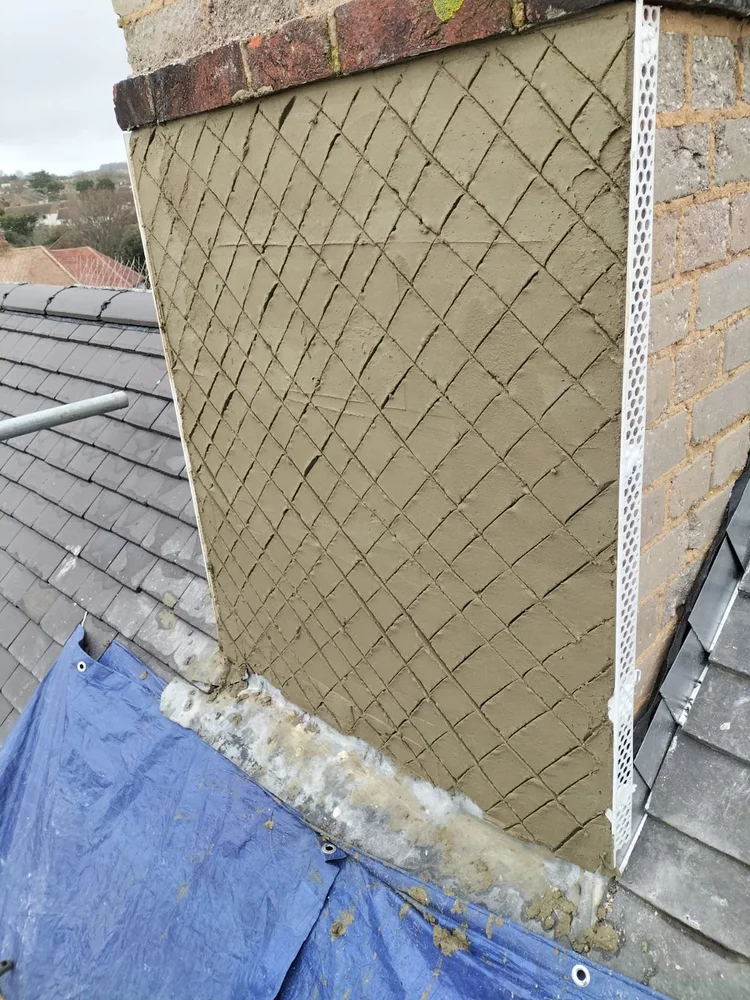
Removing unsound finishes, preparing the substrate and applying an appropriate reinforced render system where rendering is the suitable repair.
Brick replacement & rebuilding
Replacing badly spalled units or rebuilding unstable and extensively deteriorated sections, with surrounding roof details made good as required.
Chimney reduction or removal
Carefully dismantling an unused stack where appropriate, then completing the structural support, roof covering and weathering details required by the agreed design.
The chimney parts most likely to need attention
Water can enter at more than one point. This drawing shows the principal external components we consider when inspecting a chimney stack and its junction with the roof.
Swipe horizontally to inspect every label in the drawing.
Chimney work suited to Brighton’s coastal properties
Brighton and Hove contain exposed seafront homes, tall Victorian and Regency terraces, rendered stacks and more modern tiled-roof developments. Salt-laden air, wind-driven rain, repeated wetting and restricted rear access can all affect the repair specification and how the work is safely reached.
- Brick, rendered and previously repaired chimney stacks
- Tiled and slate roofs, including period properties
- Shared stacks and close neighbouring roof slopes
- Tall terraces, narrow access and chimney-level scaffolding
- Coastal exposure and wind-driven rain
- Conservation-area and listed-building considerations
We cover Brighton, Hove and the surrounding coastal area, including BN1, BN2 and BN3 properties.
- Central Brighton
- Kemptown
- Hanover
- Seven Dials
- Preston Park
- Patcham
- Woodingdean
- Rottingdean
- Saltdean
- Hove
- Portslade
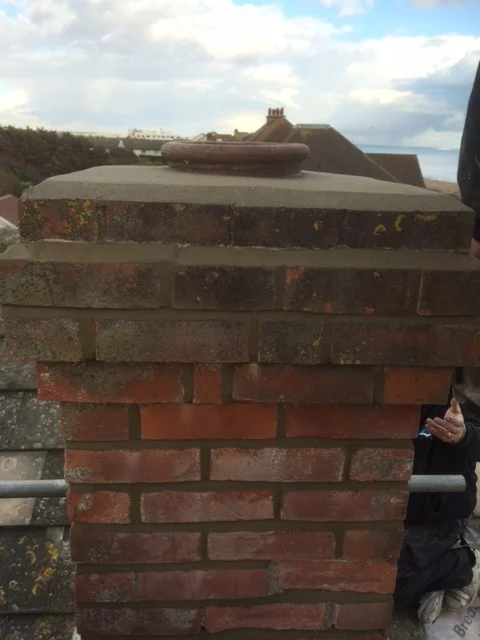
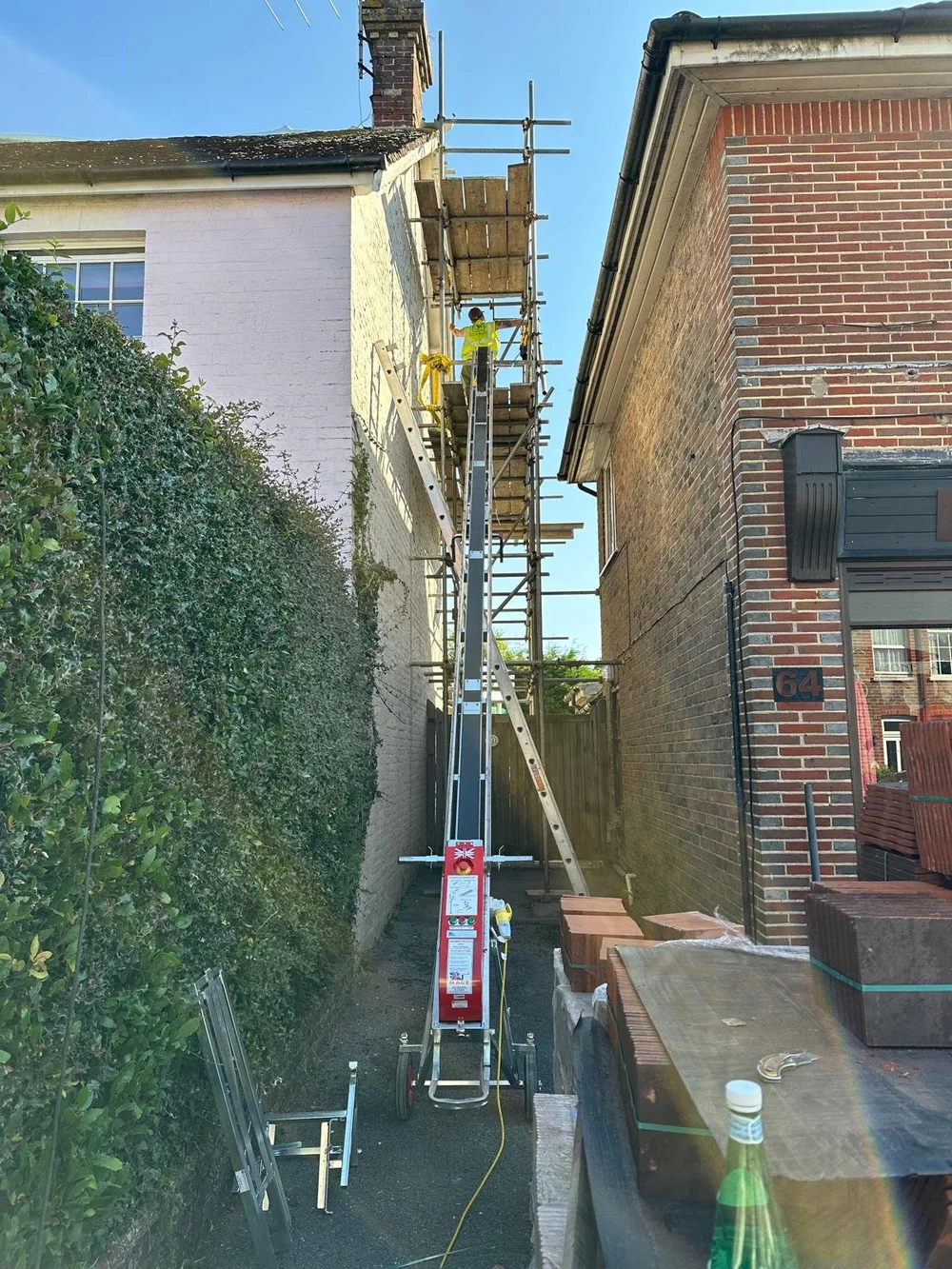
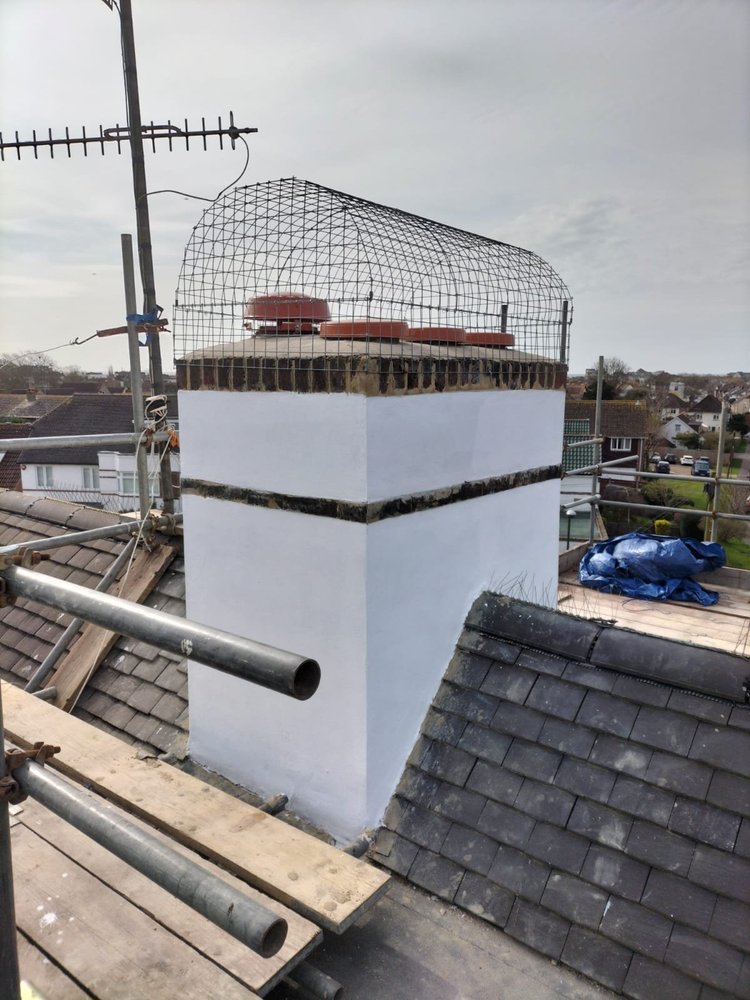
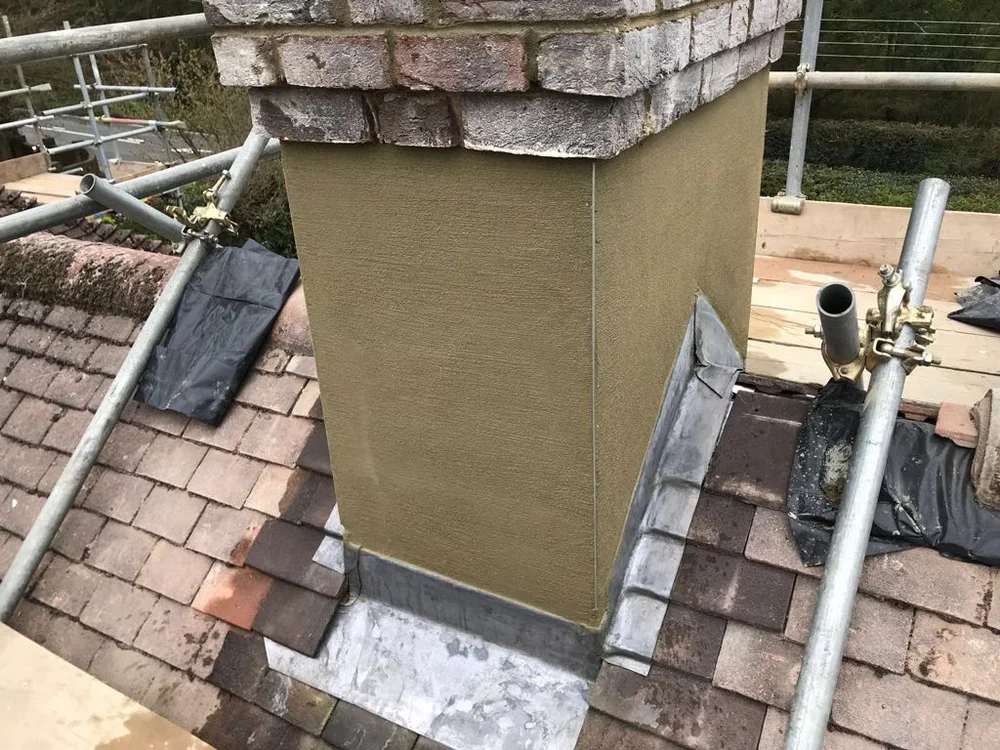
Chimney, leadwork and rendering completed by Bespoke
These photographs show chimney, leadwork and rendering projects completed by our team. They illustrate how we plan safe access, prepare each surface and finish the important roof junctions that help keep water out.
Repair, rebuild or remove the chimney?
The right option depends on structural stability, brick and mortar condition, whether the flues remain in use, heritage considerations and the condition of the surrounding roof—not simply the age of the property.
Alterations may need extra consideration for listed buildings, conservation areas, flats, shared stacks and structural chimney-breast work. An active gas or solid-fuel flue may also require the relevant competent specialist. We can explain the roofing scope, but property-specific consent and appliance advice should be confirmed before work proceeds. See the Planning Portal chimney guidance.
From chimney inspection to final photographs
Roofing and access are planned together, so the quotation can explain the proposed repair, materials and scaffold requirements before work starts.
Explain where damp is visible, when it appears and whether any masonry or pots look loose.
Ground-level and internal images help us understand the enquiry before arranging the appropriate visit.
We assess the chimney, leadwork and surrounding roof. Drone images may help where conditions allow.
The proposed scope, access, materials, price and applicable guarantee are set out clearly.
Where required, our own team coordinates safe working access around the repair programme.
Our roofers complete the agreed masonry, leadwork and roof-junction details.
The work is checked, the area is cleared and completion photographs are provided where practical.
Qualifying work receives the written workmanship guarantee stated in your quotation.
Chimney repairs with the access and roof details considered together
Chimney work is rarely only a bricklaying task. The finished repair must also manage water at the roof junction, protect the surrounding tiles or slates and be safely accessible.
Required access is coordinated in-house and included within the written quotation.
Drone, progress and completion photographs are used where practical and appropriate.
Federation of Master Builders membership and an established Checkatrade profile.
Public liability protection suitable for the roofing and access work we undertake.
Download our South Coast chimney works guide
This illustrated guide explains the principal repair options in more detail, with original Bespoke photographs and practical signs homeowners can look out for.
- Pots, cowls, coping and flaunching
- Lead aprons, stepped flashings, soakers and back gutters
- Repointing, compatible mortar and local brick replacement
- Crack assessment and HeliBar stabilisation where suitable
- Stormdry masonry protection for compatible substrates
- Controlled chimney reduction, removal and rebuilding
Brighton chimney repair FAQs
Answers to the questions homeowners commonly ask before arranging an inspection.
How much do chimney repairs cost in Brighton?
Cost depends on the height and access, the part that has failed, the condition of the masonry, lead and roof covering, and whether scaffolding is required. We inspect the relevant areas and provide a free written quotation that separates the agreed work and access requirements.
Does every chimney repair require scaffolding?
No. The access method depends on the building, roof shape, working position and scope. Where a safe working platform is required, our in-house scaffolding team can design and coordinate it with the chimney work.
Can failed lead flashing cause damp around a chimney breast?
Yes, defective flashings, soakers, aprons or back gutters can allow rainwater into the roof junction. However, porous masonry, damaged tiles, failed flaunching and other nearby details can produce similar symptoms, so diagnosis should come before repair.
Can you repoint a chimney without rebuilding it?
Often, yes—if the bricks remain sound and the stack is stable. Repointing is not a structural cure for severely spalled, moving or extensively deteriorated masonry, so we assess the condition before recommending it.
Do you replace chimney pots, caps and cowls?
We can address loose or unsuitable external terminals as part of chimney work. The correct pot, cowl or cap depends on whether the flue is active and how it must ventilate. Work connected to a gas or solid-fuel appliance may also require the appropriate competent specialist.
Can you remove an unused chimney stack?
Yes, where removal is structurally and legally appropriate. Shared chimneys, listed buildings, conservation restrictions and work extending into the chimney breast may require party-wall, planning, structural or Building Regulations input before the roofing work proceeds.
Do you use drones for chimney inspections?
Where weather, access and flight restrictions allow, drone photographs can provide a useful view of high or difficult chimney details. They do not replace physical access where materials, fixings or structural stability need close examination.
Are your chimney repairs guaranteed?
Qualifying chimney work receives the written workmanship guarantee stated in the quotation. The duration and coverage depend on the agreed repair, existing construction and materials, so we set this out before the work begins.
Which Brighton areas do you cover?
We cover Brighton and Hove, including central Brighton, Kemptown, Hanover, Seven Dials, Preston Park, Patcham, Woodingdean, Rottingdean, Saltdean, Hove and Portslade, together with surrounding Sussex areas.
Related Brighton roofing services and guidance
Use these pages to compare nearby roof defects, access options and larger repair or replacement work.
Concerned about a Brighton chimney?
Tell us where the problem is, when it appears and whether anything looks loose. Send clear photographs if it is safe to take them from ground level—never climb onto the roof.