

Roof lining replacement for tiled and slate roofs across Sussex
When old roofing felt becomes brittle, torn or badly sagged, we can strip the affected roof slopes, renew the membrane and battens, and relay suitable existing tiles or slates.
- Suitable tiles retained where practical
- In-house scaffolding
- Drone-assisted quotations where suitable
- Photographs where available
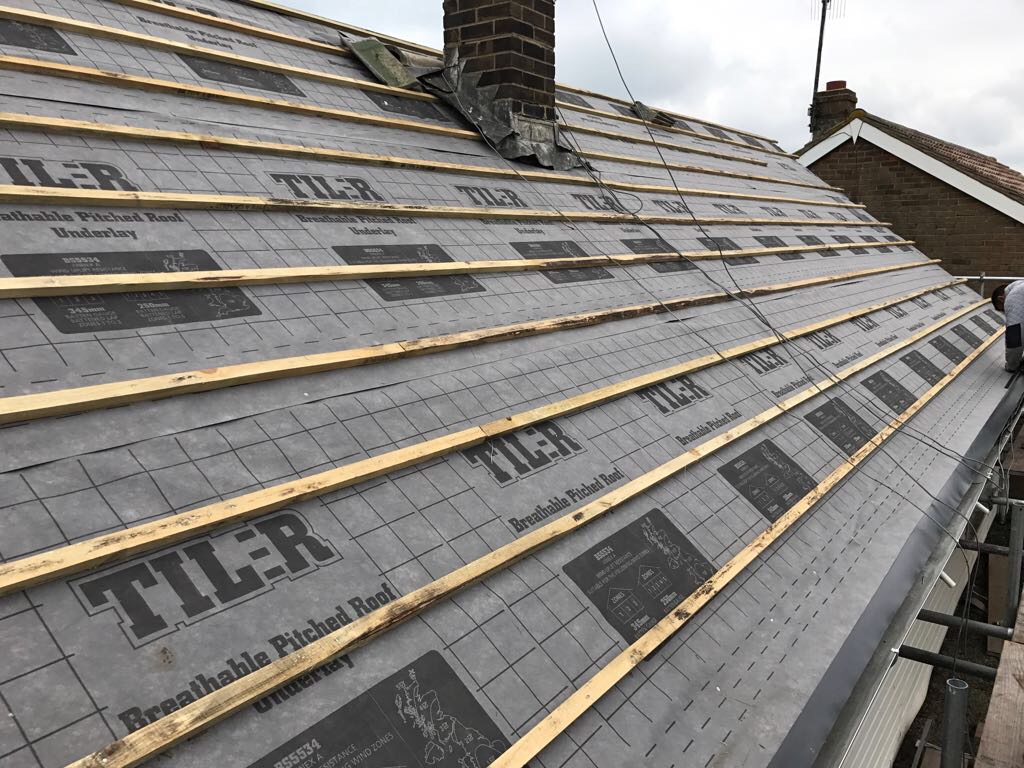
What roof-lining replacement actually involves
Roofing felt, underlay or membrane forms a secondary protective layer beneath the tiles or slates. It helps direct water towards the eaves if moisture passes beneath the external covering, but it is not a substitute for sound tiles, flashings, valleys and roof junctions.
Correct replacement normally requires the covering and existing battens to be removed externally. Once the roof structure is exposed, accessible timbers can be checked before a suitable breathable membrane, treated battens and necessary eaves or ventilation components are installed.
- Tiled and slate pitched roofs
- Complete slopes or whole roofs
- Partial renewal where appropriate
- Suitable existing coverings relaid
- Damaged tiles replaced as agreed
- Written specification before work
How the layers of a pitched roof work together
Each component has a different job. A durable result depends on the complete build-up rather than the membrane alone.
Signs that old roofing felt may be deteriorating
Some symptoms can be seen from the loft, while others only become clear after repeated leaks or an external inspection.
Brittle or crumbling felt
Older bitumen underlay may crack, tear or shed fragments into the loft as it ages.
Sagging between rafters
Loose or badly stretched lining can hold debris or fail to direct moisture correctly.
Leaks after windy rain
Water may pass beneath cracked or displaced coverings and through damaged underlay.
Daylight or visible gaps
Open areas around tears, old repairs or slipped tiles can indicate a vulnerable roof slope.
Stained or decayed battens
Long-term moisture exposure may damage the timber fixing base beneath the covering.
Repeated tile movement
Slipping tiles can be associated with failed fixings, split battens or wider age-related deterioration.
Repair, reline or replace the complete roof?
The appropriate option depends on the extent of the defect and the remaining condition of the covering, battens, details and structure.
Targeted roof repair
Suitable when damage is confined to an accessible area and reliable overlaps and weathering details can be formed.
- Small defined defect
- Surrounding lining serviceable
- Covering remains secure
Roof-lining replacement
Suitable where the underlay or battens are widely deteriorated but an appropriate quantity of existing tiles or slates can still be retained.
- Old felt failing across slopes
- New treated battens required
- Existing appearance retained where possible
Complete roof replacement
May be more sensible where the external coverings, fixings and several associated details have also reached the end of their useful life.
- Coverings extensively defective
- Repeated widespread failures
- New complete system preferred
Roof-lining work beneath the visible tiles
These photographs show different parts of the stripping, membrane, batten and relaying process on completed Bespoke roofing projects.
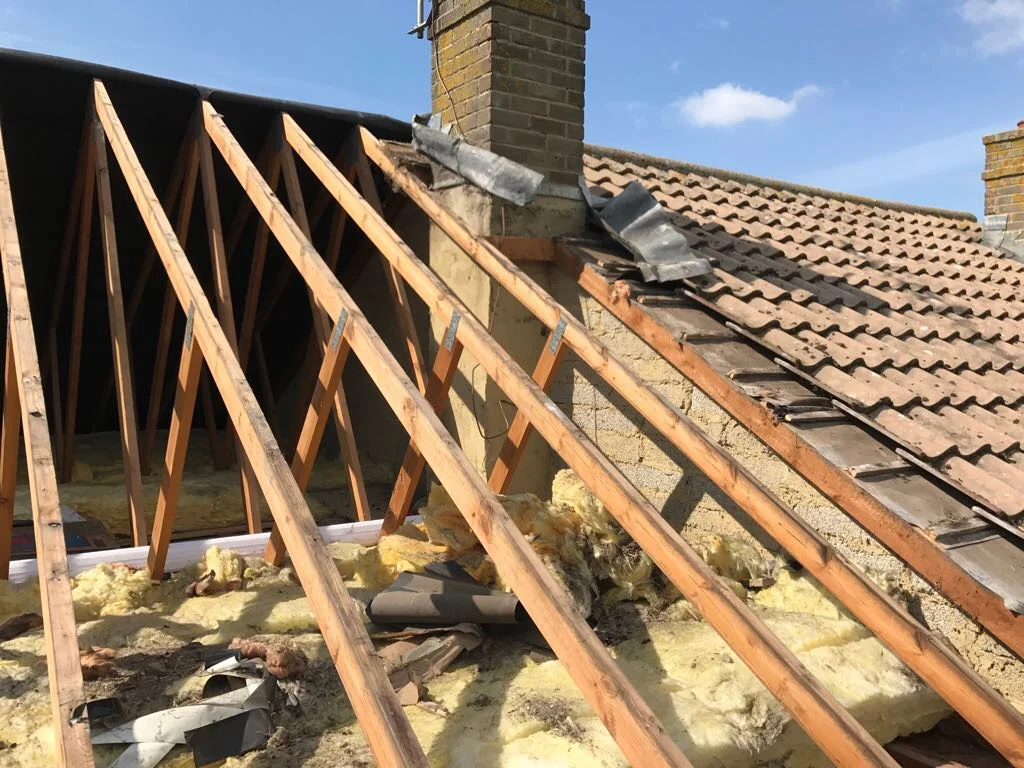
Exposing the underlying roof structure
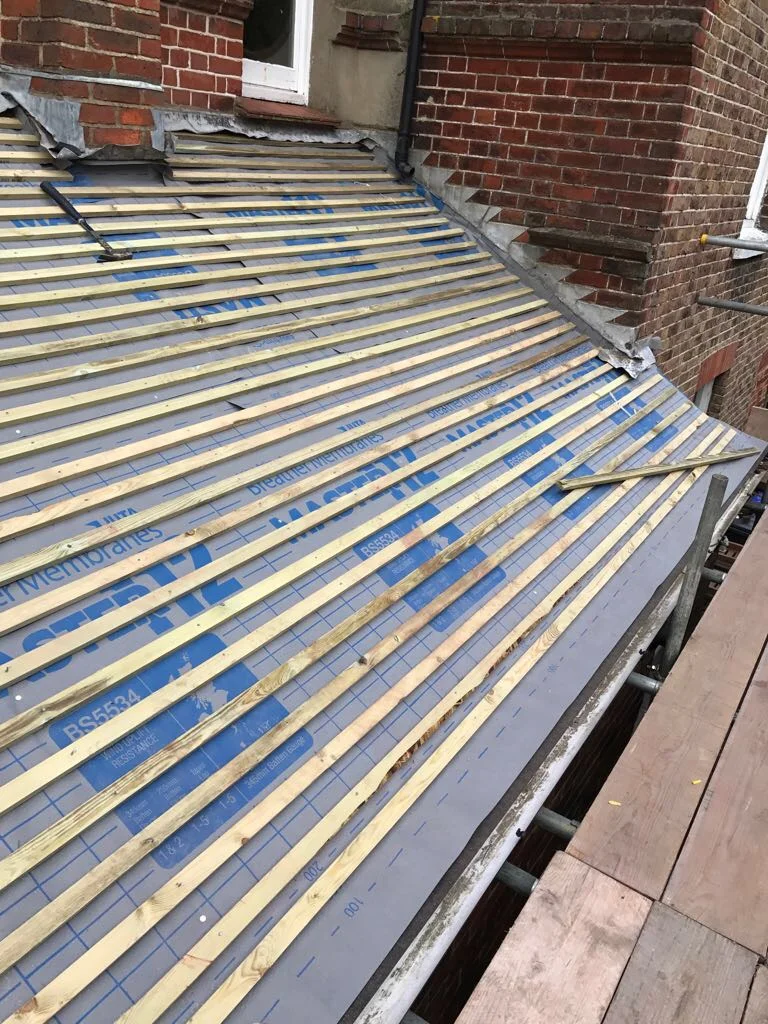
Preparing the fixing base for the covering
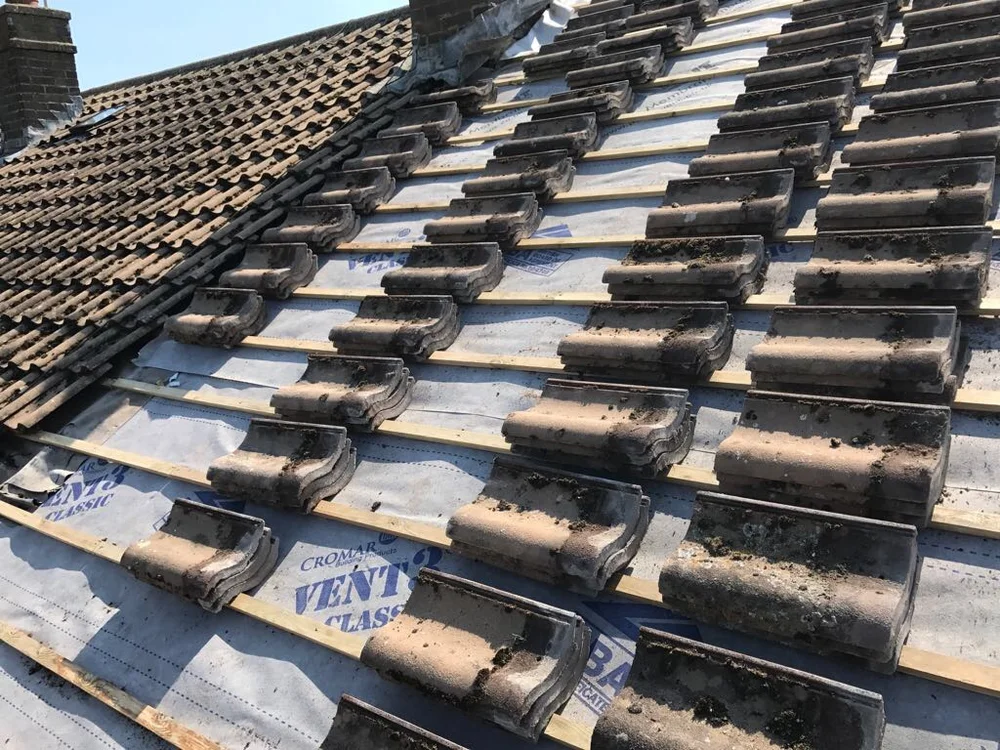
Retaining serviceable tiles where suitable
From roof inspection to final photographs
The exact sequence depends on the property, but a complete roof-lining project normally follows these coordinated stages.
Survey and quotation
We assess the covering, accessible loft areas and vulnerable details, using drone photographs where suitable.
Scaffold and strip
Our in-house scaffolding team provides access before coverings are carefully removed and separated for possible reuse.
Inspect the structure
Accessible rafters, decking and associated timbers are checked once uncovered. Significant concealed defects are photographed and explained.
Membrane and eaves
A suitable breathable membrane is installed with the agreed eaves support and moisture-management details.
Battens and ventilation
New treated battens are gauged for the covering, with ventilation components included where the roof design requires them.
Relay and finish
Suitable tiles or slates are relaid, agreed replacements are introduced and ridges, valleys, verges and junctions are completed.
Suitable existing tiles can often be relaid
Roof-lining replacement does not automatically mean replacing every external tile or slate. Where the existing covering remains serviceable, carefully retaining it can preserve the character of the property while the deteriorated hidden components are renewed.
Some unavoidable breakages can occur during stripping, particularly with older clay tiles or weathered slates. The quotation will explain whether replacement materials, matching second-hand coverings or a provisional allowance should be considered.
- Coverings assessed before reuse
- Damaged pieces replaced as agreed
- Correct gauge and headlap restored
- Chimney and valley details reviewed

Membrane, ventilation, eaves and adjoining roof details
A breathable underlay is only one component. The surrounding roof construction must be considered as part of the written specification.
Ventilation and condensation
A breathable membrane does not automatically remove every ventilation requirement. Insulation position, loft use, vapour movement, eaves airflow and ridge ventilation may all affect the appropriate arrangement.
Eaves and water discharge
Where required, rigid support at the lower edge helps carry the membrane into the gutter and reduces the risk of deterioration or sagging behind the fascia.
Chimneys, valleys and roof windows
Flashings, soakers, back gutters, valleys, abutments and roof-window junctions must integrate correctly with the renewed membrane rather than being treated as separate afterthoughts.
Building requirements
Where the extent of roof work triggers applicable Building Regulations considerations, insulation, condensation control, loading and notification requirements should be established for the individual property.
Roofing, scaffolding and clear project communication
Bespoke Sussex Roofing is the trading name of Bespoke Roofing & Renovations Ltd, a family-run roofing and construction company with more than 20 years’ experience and £10 million public liability insurance.
Free, no-obligation written quotations set out the proposed scope and access requirements. Photographs are included where available, and qualifying work receives the written guarantee stated in the quotation.
Use the official profiles alongside to verify our current Federation of Master Builders membership and Checkatrade reviews.
 Federation of Master Builders
 Bespoke Roofing on Checkatrade
Frequently asked questions
Can new roof membrane be installed from inside the loft?
A complete replacement normally requires the tiles or slates and battens to be removed externally. Small pieces inserted between rafters from inside do not reproduce a correctly lapped membrane laid over the roof structure.
Can you reuse my existing tiles or slates?
Potentially. They must be assessed for cracking, delamination, excessive weathering and suitability for relaying. The quotation can include an allowance for existing defects and unavoidable breakages.
Are the roofing battens replaced as well?
Where a complete slope is stripped for roof-lining replacement, we normally specify suitable new treated battens rather than refixing onto visibly deteriorated material.
Can you replace the lining on only one roof slope?
Yes, where the roof arrangement allows reliable weathering at ridges, valleys and adjoining slopes and the remaining areas are still serviceable.
Is roof-lining replacement the same as a new roof?
Not necessarily. Relining can retain suitable existing tiles or slates. A complete new roof normally includes new external coverings as well as membrane, battens and associated details.
Will a breathable membrane stop condensation?
Not by itself. Condensation control depends on insulation, ventilation, vapour movement, internal moisture and the complete roof design.
Is the work guaranteed?
Qualifying work receives the written guarantee stated in the quotation. The period and conditions depend on the agreed roofing system and scope rather than every repair receiving the same guarantee.
Which Sussex areas do you cover?
We undertake suitable roof-lining projects across Brighton, Hove, Worthing and surrounding East and West Sussex areas. Contact us with the property address so we can confirm coverage and the appropriate next step.
Plan the complete roof rather than one isolated layer
Is the felt beneath your roof failing?
Tell us what you can see from the loft, where water is appearing and whether the leak changes during wind or heavy rain. Send photographs where possible and we will explain the appropriate inspection route.